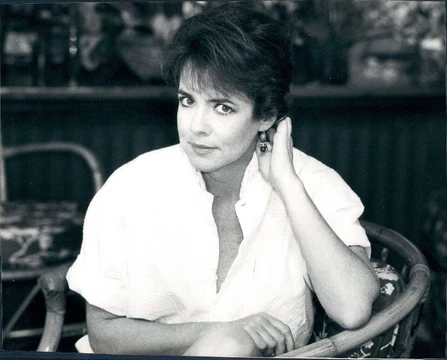
Ethel Barrymore
American actress and 'First Lady of the American Theatre.'

Wikipedia / Wikimedia Commons
Ethel Barrymore, born Ethel Mae Blythe on August 15, 1879, in Philadelphia, was an American actress whose career in stage, film, and radio lasted six decades. She was hailed as "The First Lady of the American Theatre" and won the Academy Award for Best Supporting Actress for *None but the Lonely Heart* (1944), one of four nominations in that category. She was part of the Barrymore-Drew acting dynasty.
Her parents were actors Maurice Barrymore (born Herbert Blythe) and Georgiana Drew. She was named after a character from William Makepeace Thackeray's *The Newcomes*, a favorite of her father's. Her siblings were actors John and Lionel Barrymore; she was also the aunt of John Drew Barrymore and great-aunt of Drew Barrymore. Her grandmother was actress and theater manager Louisa Lane Drew, and her uncles included Broadway star John Drew Jr. and Vitagraph actor Sidney Drew. She grew up in Philadelphia, attending Roman Catholic schools, and spent two years in England starting in 1884, where her father performed at the Haymarket Theatre. After returning to the U.S. in 1886, her father took her to her first baseball game, sparking a lifelong love of the sport.
In the summer of 1893, Barrymore traveled with her mother, who was ill with tuberculosis, to Santa Barbara, California, near the retreat of family friend Helena Modjeska. Georgiana died that July at age 36. The deaths of their parents forced Ethel and Lionel to leave school and start working as teenagers; John, younger, stayed with relatives. Barrymore made her Broadway debut in 1895 in *The Imprudent Young Couple*, starring her uncle John Drew Jr. and Maude Adams, and appeared with them again in *Rosemary* (1896). In 1897, she went to London with William Gillette for *Secret Service*. Henry Irving and Ellen Terry then cast her in *The Bells*, and on New Year's Day 1898, she originated the role of Euphrosine in *Peter the Great* at the Lyceum. Many men courted her, including Winston Churchill, who proposed; she declined, not wanting to be a politician's wife. They remained lifelong friends, and Churchill later married Clementine Hozier, who resembled Barrymore.
Returning to the U.S., producer Charles Frohman cast her in *Catherine* and *His Excellency the Governor* before giving her the star-making role of Madame Trentoni in *Captain Jinks of the Horse Marines*, which opened at the Garrick Theatre in London
- born
- August 15, 1879
Lore & Background
Ethel Barrymore was born Ethel Mae Blythe in Philadelphia, the second child of actors Maurice Barrymore (born Herbert Blythe) and Georgiana Drew. She was named for her father's favorite character in Thackeray's The Newcomes. Her siblings were actors John and Lionel Barrymore; she was the aunt of John Drew Barrymore and great-aunt of Drew Barrymore. After her mother died of tuberculosis in 1893, Barrymore and her brother Lionel were forced to work in their teens, neither finishing high school. Her first Broadway appearance was in 1895 in The Imprudent Young Couple, starring her uncle John Drew Jr. and Maude Adams.
In 1897, she traveled to London with William Gillette's troupe, where she was offered a role by Henry Irving and Ellen Terry. While in London, Winston Churchill proposed marriage; she refused, not wishing to be a politician's wife. She
Reader's Guide
Ethel Barrymore's significance lies in her six-decade career as a stage, screen, and radio actress, earning her the title 'First Lady of the American Theatre.' She won the Academy Award for Best Supporting Actress for None but the Lonely Heart (1944) and received three additional nominations in that category. Her involvement in the 1919 Actors' Equity strike demonstrated her commitment to performers' rights, influenced by her parents' fates. She was a baseball fan and briefly a boxing fan until witnessing the brutality of the 1919 Dempsey/Willard fight. Her catchphrase 'That's all there is—there isn't any more!' became widely popular in the 1920s and 1930s. The Ethel Barrymore Theatre in New York remains a lasting tribute. Her legacy includes being part of the renowned Barrymore-Drew acting family and appearing in films such as The Spiral Staircase (1946), The Paradine Case (1947), and Pinky (1949).
Did You Know?
- Winston Churchill proposed marriage to Ethel Barrymore; she refused because she didn't want to be a politician's wife.
- Ethel Barrymore's catchphrase 'That's all there is—there isn't any more!' was referenced in the 1933 film *The Devil's Brother* (also known as *Fra Diavolo*), not in *Sons of the Desert* as sometimes claimed.
Frequently Asked Questions
Who is Ethel Barrymore?
Ethel Barrymore was an American actress born Ethel Mae Blythe in Philadelphia on August 15, 1879, who went on to build a career spanning roughly sixty years across stage, film, and radio. She is widely remembered as one of the most celebrated performers in American theatrical history.
What award did Ethel Barrymore win?
She received the Academy Award for Best Supporting Actress in 1944 for her role in *None but the Lonely Heart*, though she had been nominated in that category four times in total.
What was Ethel Barrymore's family background?
She came from the famous Barrymore-Drew acting dynasty, with both parents—Maurice Barrymore and Georgiana Drew—being professional stage actors. Her father, originally named Herbert Blythe, adopted the surname Barrymore for his acting career.
What title was Ethel Barrymore known by?
She was affectionately called "The First Lady of the American Theatre," a nickname that reflected her decades-long prominence and influence on the Broadway stage.
How long did Ethel Barrymore's career last?
Her professional work stretched across approximately six decades, encompassing performances on the stage, in films, and on radio. This extraordinary longevity made her one of the most enduring figures in American entertainment.
More in Stage And Screen Actresses 1-24
Spotted an error? Know more?
This is a living reference — every entry is fact-audited, and reader corrections feed straight into our audit queue. Suggest an edit · See this site's audit record