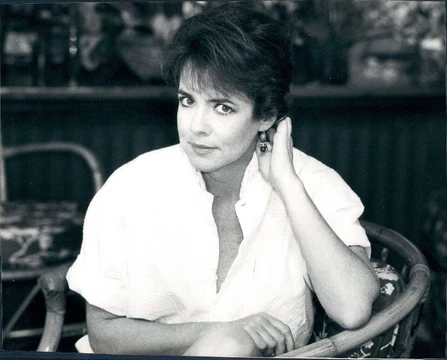
Gracie Fields
British star of cinema and music hall, known as Our Gracie.

Wikipedia / Wikimedia Commons
Dame Gracie Fields, born Grace Stansfield on 9 January 1898 in Rochdale, Lancashire, was a British actress, singer, and comedian who became one of the most beloved entertainers of her era. She rose to fame in cinema and music hall, ranking among Britain’s top ten film stars in the 1930s and, in 1937, was reportedly the highest-paid film star in the world. Fans called her “Our Gracie” and “the Lancashire Lass,” and she kept her strong Lancashire accent throughout her life. She was made a Commander of the Order of the British Empire (CBE) and an Officer of the Venerable Order of St John (OStJ) in 1938, and was appointed a Dame Commander of the Order of the British Empire (DBE) in 1979.
Fields grew up above her grandmother’s fish and chip shop in Rochdale, the daughter of Frederick and Sarah Jane Stansfield. Her great-grandfather, William Stansfield, traced his roots to the Stansfield family of Yorkshire. She first performed onstage in 1905 as a child, joining groups like Haley’s Garden of Girls and Clara Coverdale’s Nine Dainty Dots. Her sisters Edith and Betty, and brother Tommy, also went into show business, but Gracie was the standout. She made her professional variety debut at the Rochdale Hippodrome in 1910, soon leaving her half-time job at a cotton mill. Early local appearances included Todmorden, Milnrow, Burnley, and Blackpool, with a Burnley paper calling her “The Girl with the Double Voice.”
She met comedian and impresario Archie Pitt while touring in Percy Hall’s show *Yes, I Think So*. On her 18th birthday, Pitt gave her champagne and wrote in an autograph book that he would make her a star. He managed her career, and they married in 1923 at Clapham Register Office. Their first revue, *It’s A Bargain!*, came in 1915, and they toured Britain together until 1931. From 1918 to 1924, they appeared in *Mr Tower of London*, which brought Fields to the West End for the first time. Later shows included *The Show’s The Thing* and *Walk This Way*. Pitt was brother to Bert Aza, founder of the Aza Agency, which represented many entertainers, including Stanley Holloway—introduced to Aza by Fields—and Betty Driver, discovered by Archie as a replacement in *Mr Tower of London*. Fields and Holloway first worked together on her 1934 film *Sing As We Go* and remained lifelong friends.
Fields gained major attention with *Mr Tower of London* in the West End, and h
- born
- 9 January 1898
- died
- 27 September 1979
- field
- Actress, singer, comedian
- nationality
- British
- known_for
- One of the top ten film stars in Britain during the 1930s; highest paid film star in the world in 1937
Lore & Background
Fields was born Grace Stansfield over a fish and chip shop in Rochdale, Lancashire. She made her first stage appearance in 1905 and her professional debut in variety at the Rochdale Hippodrome in 1910, soon leaving her half-time job in a cotton mill. She met comedian Archie Pitt, who managed her career and whom she married in 1923. Their revue 'Mr Tower of London' brought Fields to the West End and major public notice. Her first record, 'My Blue Heaven,' sold 500,000 copies in 1928, and by 1933 His Master's Voice had produced her four millionth record. Her most famous song, 'Sally,' was written for her first film, 'Sally in Our Alley' (1931), a major box office hit. She later made films in the United States for a record fee of £200,000 for four films, though she insisted they be filmed in Britain.
Reader's Guide
Gracie Fields was a defining figure of British popular entertainment in the 1930s, achieving unprecedented commercial success as a film star and recording artist. Her enduring appeal lay in her strong Lancashire identity and her ability to connect with live audiences, a connection she preferred over film work. Her charity work included founding the Gracie Fields Children's Home and Orphanage in 1933 and supporting Rochdale Association Football Club. During World War II, despite serious illness, she entertained troops through ENSA, travelling to war-torn areas and later to North America at the suggestion of Winston Churchill to raise funds for the Navy League and Spitfire Fund. Although her wartime absence from Britain temporarily reduced her popularity, she continued her career post-war with radio shows and performances. She was appointed CBE and OStJ in 1938, and Dame Commander of the Order of the British Empire in 1979.
Did You Know?
- Fields was born over a fish and chip shop owned by her grandmother in Rochdale, Lancashire.
- Her first record, 'My Blue Heaven,' sold 500,000 copies in 1928.
- She was considered the highest paid film star in the world in 1937.
- The final lines of her signature song 'Sally' were written by her husband's mistress, Annie Lipman.
More in Stage And Screen Actresses 1-24
Spotted an error? Know more?
This is a living reference — every entry is fact-audited, and reader corrections feed straight into our audit queue. Suggest an edit · See this site's audit record