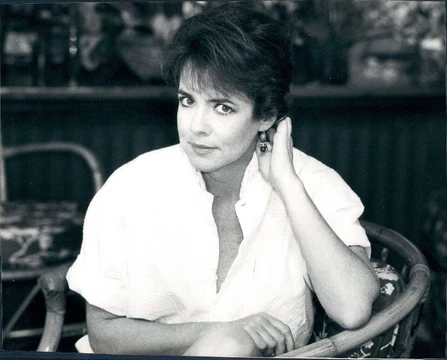
Helen Hayes
First woman to win the EGOT and Triple Crown of Acting.
Helen Hayes MacArthur, born Helen Brown on October 10, 1900, in Washington, D.C., and passing on March 17, 1993, was an American actress. Known as the "First Lady of American Theatre," she became the second person and first woman to achieve EGOT status—winning an Emmy, Grammy, Oscar, and Tony—and was the first to earn the Triple Crown of Acting. Her career stretched across 82 years, and she is remembered as one of the 20th century's finest leading ladies.
Her mother, Catherine Estelle "Essie" Hayes, was an aspiring actress in touring companies, while her father, Francis van Arnum Brown, held various jobs, including clerk at the Washington Patent Office and manager for a wholesale butcher. Hayes's maternal grandparents were Irish Catholics who emigrated during the Great Famine. She attended Dominican Academy in Manhattan from 1910 to 1912, performing in *The Old Dutch* and *Little Lord Fauntleroy*, and later graduated from the Academy of the Sacred Heart Convent in Washington in 1917.
Hayes began her stage career at age five, singing at Washington's Belasco Theatre. By ten, she appeared in the silent short *Jean and the Calico Doll* (1910). Her sound film debut came with *The Sin of Madelon Claudet*, earning her the Academy Award for Best Actress. She starred in films like *Arrowsmith* (with Ronald Colman), *A Farewell to Arms* (with Gary Cooper), *The White Sister* (opposite Clark Gable), *Another Language* (with Robert Montgomery), *What Every Woman Knows*, and *Vanessa: Her Love Story* (also with Montgomery), though she preferred the stage. She returned to Broadway in 1935, playing the title role in *Victoria Regina* for three years, with Vincent Price as Prince Albert. In 1951, she appeared in the Broadway revival of *Mary Rose*. She was the first recipient of the Sarah Siddons Award in 1953 for Chicago theatre work, winning again in 1969. Back in Hollywood in the 1950s, her film career rose with *My Son John* (1952) and *Anastasia* (1956)—the latter considered a comeback after she paused her career due to her daughter Mary's death and her husband's failing health. She won a Best Supporting Actress Oscar for *Airport* (1970) as an elderly stowaway, and later appeared in Disney films like *Herbie Rides Again*, *One of Our Dinosaurs Is Missing*, and *Candleshoe*.
In 1955, the Fulton Theatre was renamed the Helen Hayes Theatre. When business interests sou
- born
- October 10, 1900, Washington, D.C.
- died
- March 17, 1993
- field
- Acting
- nationality
- American
- known_for
- First woman to win the EGOT; first person to win the Triple Crown of Acting; Presidential Medal of Freedom (1986); National Medal of Arts (1988)
Lore & Background
Helen Hayes Brown was born in Washington, D.C., on October 10, 1900. Her mother, Catherine Estelle "Essie" (née Hayes), was an aspiring actress who worked in touring companies. Her father, Francis van Arnum Brown, worked at a number of jobs, including as a clerk at the Washington Patent Office and as a manager and salesman for a wholesale butcher. Hayes began a stage career as a five-year-old singer at Washington's Belasco Theatre. By age 10, she had made a short silent film, Jean and the Calico Doll (1910). Her sound film debut was The Sin of Madelon Claudet, for which she won the Academy Award for Best Actress. She followed that with starring roles in Arrowsmith, A Farewell to Arms, The White Sister, Another Language, What Every Woman Knows, and Vanessa: Her Love Story. Hayes eventually returned to Broadway in 1935, where for three years she played the title role in Gilbert Miller's production of Victoria Regina, with Vincent Price as Prince Albert. In 1951, she was involved in the Broadway revival of J.M. Barrie's play Mary Rose. In 1953, she was the first-ever recipient of the Sarah Siddons Award for her work in Chicago theatre, repeating as the winner in 1969. She returned to Hollywood in the 1950s, starring in My Son John (1952) and Anastasia (1956), and won the Academy Award for Best Supporting Actress for her role in Airport (1970). She followed that up with several roles in Disney films such as Herbie Rides Again, One of Our Dinosaurs Is Missing and Candleshoe. Her performance in Anastasia was considered a comeback — she had suspended her career for several years due to her daughter Mary's death and her husband's failing health.
Reader's Guide
Helen Hayes's significance lies in her pioneering achievements as the first woman to win the EGOT and the first person to win the Triple Crown of Acting, marking her as a transformative figure in American entertainment. Her career, spanning 82 years from child performer to acclaimed stage and screen actress, set a standard for versatility and longevity. The annual Helen Hayes Awards, recognizing excellence in professional theatre in greater Washington, D.C., since 1984, and the two Broadway theatres renamed in her honor (the Fulton Theatre in 1955 and the Little Theatre in 1983) cement her legacy. A leading philanthropist, she was most proud of her 49-year association with the Helen Hayes Hospital, a non-profit rehabilitative center in West Haverstraw, New York. In 1982, with friend Lady Bird Johnson, she founded the National Wildflower Research Center. Hayes also received the Presidential Medal of Freedom in 1986 and the National Medal of Arts in 1988. Her influence endures through these institutions and the continued use of her name in theatre awards and venues.
Did You Know?
- Helen Hayes was the second person and first woman to win the EGOT (Emmy, Grammy, Oscar, Tony).
- She was the first person to win the Triple Crown of Acting.
- The former Fulton Theatre on 46th Street in New York City was renamed the Helen Hayes Theatre in 1955.
- She founded the National Wildflower Research Center with Lady Bird Johnson in 1982.
More in Stage And Screen Actresses 1-24
Spotted an error? Know more?
This is a living reference — every entry is fact-audited, and reader corrections feed straight into our audit queue. Suggest an edit · See this site's audit record