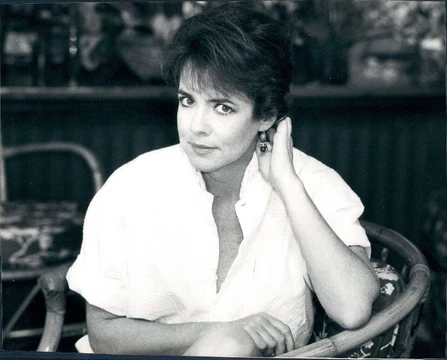
Irene Dunne
American actress nominated five times for Best Actress Oscar.
Irene Dunne was born Irene Marie Dunn on December 20, 1898, in Louisville, Kentucky. Her father, a steamboat engineer and government inspector of Irish descent, died of a kidney infection when she was fourteen. Her mother, a concert pianist and music teacher of German heritage, then moved the family to Madison, Indiana. Dunne grew up playing piano and singing, and after high school she studied music at the Indianapolis Conservatory and later the Chicago Musical College, hoping to become an opera soprano. When she failed two auditions with the Metropolitan Opera Company—her voice was deemed too slight and she lacked experience—she turned to musical theater. She made her Broadway debut on Christmas Day 1922 in *The Clinging Vine*, and over the next several years performed in shows such as *Ginger*, *Lollipop*, *The City Chap*, *Yours Truly*, and *She's My Baby*. She added an "e" to her surname during this period, after years of having it misspelled as "Dunne." A chance meeting with producer Florenz Ziegfeld Jr. led to her starring as Magnolia Hawks in a road company production of *Show Boat*. An RKO talent scout saw her perform, and she signed with the studio, making her film debut in the musical *Leathernecking* (1930). Already in her thirties, she competed with younger actresses for roles.
Dunne appeared in 42 films and earned five Academy Award nominations for Best Actress: for the western drama *Cimarron* (1931), the screwball comedies *Theodora Goes Wild* (1936) and *The Awful Truth* (1937), the romance *Love Affair* (1939), and the drama *I Remember Mama* (1948). She never won, and is often cited as one of the finest actresses never to receive the award. She is especially regarded for her comedic work in the screwball genre. Her last film role came in 1952, after which she acted in television anthology episodes and on radio. Known for her regal bearing, she was nicknamed "The First Lady of Hollywood," though she remained proud of her Irish-American, country-girl roots.
In retirement, Dunne devoted herself to philanthropy. President Dwight D. Eisenhower appointed her as a U.S. delegate to the United Nations, where she promoted world peace and refugee-relief programs. She received the Laetare Medal from the University of Notre Dame and a papal knighthood as a Dame of the Order of the Holy Sepulchre. In 1985, she was honored with a Kennedy Center Honor fo
- born
- December 20, 1898
- died
- September 4, 1990
- field
- Actress
- nationality
- American
- known_for
- Comedic roles, screwball comedy, five Academy Award nominations
Lore & Background
Irene Marie Dunn was born on December 20, 1898, in Louisville, Kentucky, to Joseph John Dunn, an Irish-American steamboat engineer and inspector, and Adelaide Antoinette Dunn, a concert pianist and music teacher. After her father died when she was 14, her family relocated to Madison, Indiana. She studied at the Indianapolis Conservatory of Music and later won a scholarship to the Chicago Musical College, graduating in 1926. Hoping to become an opera singer, she moved to New York but failed two auditions with the Metropolitan Opera Company due to inexperience and her 'slight' voice. She then performed in musicals on Broadway, including the lead in the roadshow production of Irene, and later starred as Magnolia Hawks in a road company adaptation of Show Boat. A talent scout for RKO Pictures attended a performance, and Dunne signed a contract, making her Hollywood film debut in Leathernecking (1930).
Reader's Guide
Irene Dunne's significance lies in her versatility across genres, particularly her comedic roles in screwball comedies such as Theodora Goes Wild (1936) and The Awful Truth (1937), for which she received Academy Award nominations. She also earned nominations for the western drama Cimarron (1931), the romance Love Affair (1939), and the drama I Remember Mama (1948). Dunne is regarded as one of the best comedic actresses in the screwball genre and is considered one of the finest actresses never to have won an Academy Award. After her last film role in 1952, she devoted her retirement to philanthropy, was chosen by President Dwight D. Eisenhower as a delegate to the United Nations, and received a Laetare Medal and a papal knighthood. In 1985, she was awarded a Kennedy Center Honor for her services to the arts.
Did You Know?
- Dunne added the extra 'e' to her surname after it had been misspelled as 'Dunne' at times throughout her life.
- She was nicknamed 'The First Lady of Hollywood' for her regal manner.
- She was chosen by President Dwight D. Eisenhower as a delegate for the United States to the United Nations.
- Dunne received a papal knighthood—Dame of the Order of the Holy Sepulchre.
More in Stage And Screen Actresses 1-24
Spotted an error? Know more?
This is a living reference — every entry is fact-audited, and reader corrections feed straight into our audit queue. Suggest an edit · See this site's audit record